
New Zealand arrival declaration
NZTD for Families, Kids and Babies
A practical guide for families flying to New Zealand: one NZTD per traveller, who fills in a child's form, passport details, biosecurity with kids and the eGate age rule.
Flying to New Zealand as a family means a little extra paperwork, but nothing complicated once you know the rules. The key point is simple: the New Zealand Traveller Declaration (NZTD) is required per person, so every child and every baby needs their own declaration, submitted by a responsible adult. This guide walks you through who fills in a minor's form, which passport details you need, how to juggle several declarations on one family trip, and the biosecurity items that trip up parents most.
In brief: There is no family declaration and no shared form. Each traveller, from a newborn to a grandparent, needs an individual NZTD linked to their own passport. An adult can complete a child's declaration. The NZTD is free on the official site, biosecurity rules apply to baby food and pushchairs, and the eGate is only for travellers aged 10 or over.
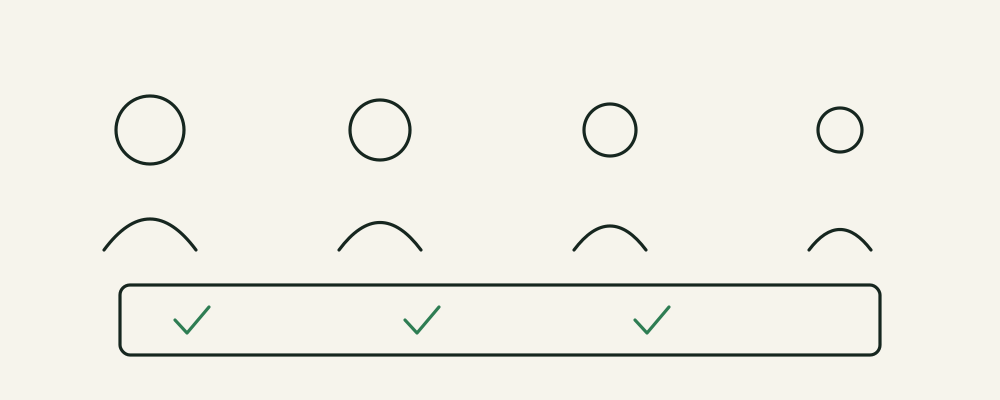
One NZTD per traveller, no exceptions
The NZTD replaced the old paper Passenger Arrival Card, and just like that card, it is one declaration per person. There is no combined family form and no way to add several people to a single submission. If four of you are flying to Auckland, you need four separate declarations.
This applies to everyone crossing the border, regardless of age or nationality:
- Adults, including New Zealand and Australian passport holders.
- Teenagers and school-age children.
- Toddlers and infants.
- Newborn babies, even one only a few weeks old on their first flight.
A common assumption is that very young children are somehow exempt. They are not. A baby travels on their own passport, so a baby needs their own NZTD. The good news is that a child's declaration is usually quicker to complete than an adult's, because the travel history and goods sections are typically much shorter.
In short: count heads, then count declarations. They should match.
Who can complete a child's declaration
A minor cannot submit their own declaration, so a responsible adult completes it on their behalf. In practice this is usually a parent or legal guardian, but any accompanying adult travelling with the child can do it, for example an aunt, an older sibling who is an adult, or a grandparent.
When you complete a child's form, you answer the questions as they apply to the child, not to yourself. The biosecurity and customs questions relate to what is in the child's bags and what the child is bringing in. If your toddler's suitcase contains snacks, honey sticks or a wooden toy, those belong on the child's declaration.
Good to know: you can complete each family member's declaration from your own device. You do not need a separate phone or email for each child. Many parents do the whole family in one sitting, one form after another.
In short: an accompanying adult fills in a child's NZTD, answering every question from the child's point of view.
Passport details for each child
Because every NZTD is tied to a passport, you need each child's own passport to hand when you fill in their form. Gather the documents before you start so you are not hunting for them mid-flight or in a busy airport.
For each traveller you will typically enter details drawn straight from the passport, such as:
- Full name exactly as printed.
- Date of birth.
- Passport number.
- Nationality and country of issue.
- Expiry date.
Type these exactly as they appear on the passport, including middle names and any hyphens. A mismatch between the declaration and the travel document is one of the most common avoidable problems at the border. If you want a fuller checklist of what to prepare, see our guide on NZTD requirements and documents.
In short: have every child's passport open in front of you and copy the details precisely.
What a child's declaration actually asks
A child's NZTD covers the same broad areas as an adult's: travel, customs, immigration and biosecurity. The difference is that the answers describe the child, so most sections are shorter and simpler.
Typical areas you will answer for a child include:
- Their trip, such as where they are arriving from and where they will stay.
- Their goods, meaning anything in the child's own bags, including food, gifts and souvenirs.
- Their biosecurity items, such as baby food, formula or a wooden toy.
- Their health and background questions, answered honestly on the child's behalf.
Do not merge a child's belongings into your own declaration or vice versa. If a jar of baby food is in the nappy bag you are carrying, decide whose declaration it belongs to and answer consistently. The aim is that each person's form is an accurate picture of what that person is bringing in.
Good to know: young children rarely have a complicated travel history, so their forms are often the quickest of the family. Doing the children first can be a satisfying way to start.
In short: a child's declaration mirrors an adult's but describes the child; keep each person's goods on the right form.
Managing several declarations: web vs app
You can complete the NZTD either on the official website or in the official NZTD app, and both work well for families. The right choice depends on how you like to work.
The website is handy when you are at a laptop or tablet with a keyboard, entering several people in a row. The app keeps declarations together on one device and can be convenient on the move, including on a phone during a stopover. Either way, the declaration links to each passport once submitted, so what matters is that every person's form is done and submitted before you reach passport control.
Here is a quick way to keep track of a family trip:
- List every traveller and their passport.
- Complete one declaration at a time, checking the name and passport number against the document.
- Submit each one and note that it is done.
- Keep any confirmation emails together, but remember the trip is linked to the passport, not to a code you have to show.
- Re-check the list before you fly so no one is missed.
Good to know: the NZTD can be submitted from 24 hours before your journey to New Zealand begins. For a family, doing them the evening before, at home and unhurried, beats rushing through several forms at the gate. See when to submit the NZTD for timing details.
In short: web or app both work; pick one, do the family one form at a time, and finish before departure.
Biosecurity when you travel with children
New Zealand has some of the strictest biosecurity rules in the world, and travelling with children brings a few extra items into the picture. The principle is always the same: if in doubt, declare it. Failing to declare risky goods can lead to an instant fine, and that applies to items in a child's bag too.
Family items that regularly need to be declared or checked include:
- Baby food, formula and powdered milk. These are generally fine to bring, but food must be declared. Declaring it is quick; not declaring it is the problem.
- Snacks for the journey such as fruit, sandwiches or nuts. Fresh fruit and many fresh foods cannot come in, so eat or bin them before you land, and declare anything left over.
- Honey and honey products, which face tight restrictions.
- Prams, pushchairs and buggies that have been used on farms, beaches, parks or muddy paths. Anything that has touched soil, water or animals may be inspected.
- Outdoor and camping gear, kids' hiking boots and sports shoes with soil on them. Clean them before you pack.
- Wooden toys, feathers, shells and natural souvenirs, which can carry biosecurity risk.
Clean the wheels of a pram and the soles of small shoes before the trip, and you will sail through faster. For the full picture, read our guide on what to declare at New Zealand biosecurity.
In short: declare baby food, formula and snacks, and clean prams and small shoes that have touched soil.
One parent, grandparents or mixed surnames
Family trips do not always mean two parents with the same surname, and the NZTD itself does not decide who may travel with a child. That is a matter for border and immigration rules, but it helps to be prepared.
- A child travelling with one parent or with grandparents is common and completely normal. The NZTD is still completed per child by an accompanying adult. Some families carry a signed letter of consent from the absent parent and a copy of their ID, which border officers may ask to see. This is not part of the declaration, but it is sensible to have.
- Families with different surnames sometimes worry that a mismatch looks odd. It does not, and it is very common. Carrying birth certificates or other documents that show the relationship can smooth things if an officer asks.
- Guardians and other relatives completing a child's declaration should answer as the child and be ready to explain the relationship at the border.
Good to know: the declaration does not replace immigration checks. Depending on nationality, each traveller, children included, may also need an NZeTA or a visa before they fly. See how these differ in NZTD vs NZeTA vs IVL.
In short: single-parent, grandparent and mixed-surname trips are routine; carry consent letters or relationship documents in case an officer asks.
The eGate and younger children
The eGate is the automated passport gate at several New Zealand airports, and it speeds up arrivals enormously. But there is an age rule that matters for families: the eGate is only for travellers aged 10 or over. Younger children go to a staffed desk instead.
That means a family will often split at the border:
- Travellers aged 10 and above with an ePassport and a completed NZTD can use the eGate.
- Children under 10 are processed by an officer at a manned counter.
In practice, a parent usually goes to the counter with the youngest children while older members use the gate and wait on the other side. There is nothing to worry about, and staff are used to families arriving together. Whichever route each person takes, the NZTD must already be done, because it is checked against the passport at the border. There is no QR code to show; the declaration is linked to the passport.
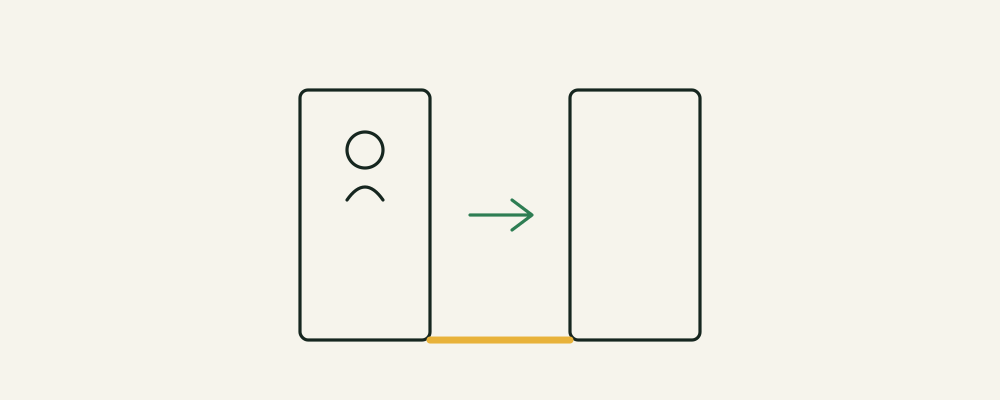
In short: ages 10 and over can use the eGate; under-10s go to a desk, so families often split briefly on arrival.
Keeping track of who is done
The single most common family slip is finishing most declarations and forgetting one, often the baby's, because it feels like the youngest traveller barely counts. A quick tracking habit avoids that.
Try this simple approach:
- Write down every traveller's name in a note on your phone.
- Tick each name off only once that person's declaration is submitted.
- Include infants and any child travelling on a newly issued passport.
- Do a final head-count against the list the night before you fly.
Because the declaration is linked to each passport rather than to a code you carry, there is nothing to lose or misplace once it is done. The job is simply to make sure not a single family member is skipped. If you want to confirm a declaration went through, our status page is there to help.
Good to know: if you realise at the airport that someone's declaration is missing, do not panic. It can still be completed before passport control, though doing it calmly at home the day before is far more pleasant with children in tow.
In short: keep a simple checklist of names and tick each off as it is submitted, babies included.
Traveller type at a glance
Use this table to check who needs what before you fly.
| Traveller type | Own declaration needed | Notes |
|---|---|---|
| Adult | Yes | Completes their own; can also complete children's forms. |
| Teenager (10-17) | Yes | Adult can complete it; may use the eGate with an ePassport. |
| Child under 10 | Yes | Adult completes it; goes to a staffed desk, not the eGate. |
| Baby or newborn | Yes | Adult completes it using the baby's own passport. |
| Child with one parent | Yes | Consider a consent letter from the other parent. |
| Child with grandparents | Yes | Accompanying adult completes and answers for the child. |
In short: every row says yes to a declaration; the differences are who fills it in and which arrival route they take.
A calm order for family trips
To keep it stress-free, work through your family's declarations in a steady sequence rather than all at once at the airport:
- Confirm whether each traveller also needs an NZeTA or visa for their nationality.
- Collect every passport and check the expiry dates.
- From 24 hours before travel, complete one NZTD per person.
- Answer biosecurity questions honestly for each person's bags.
- Clean prams and shoes and set aside any food to declare.
- Re-check the list so nobody is missing.
In short: a short checklist the night before turns a fiddly job into a five-minute routine.
Key points
- The NZTD is one declaration per traveller, including babies and newborns.
- A responsible adult completes a child's declaration, answering as the child.
- You need each child's own passport and must copy the details exactly.
- Baby food, formula, snacks and prams may need declaring or cleaning at biosecurity.
- The eGate is for ages 10 and over; younger children use a staffed desk.
- The NZTD is free on the official site and is linked to the passport, so there is no QR code to show.
FAQ: NZTD for families and children
Does my baby really need their own NZTD?
Yes. The declaration is required per person and is linked to each passport. Since a baby travels on their own passport, they need their own declaration, completed by an adult.
Can one form cover the whole family?
No. There is no family or group declaration. Each traveller needs an individual NZTD, so a family of four submits four separate forms.
Who fills in a child's declaration?
A responsible adult travelling with the child, usually a parent or guardian, but it can be any accompanying adult such as a grandparent. They answer every question as it applies to the child.
What passport details do I need for each child?
The details printed on the child's passport, such as full name, date of birth, passport number, nationality and expiry date. Enter them exactly as shown.
Should I use the website or the app for several children?
Both work. The website suits entering several people on a keyboard; the app keeps forms on one device. Either way, submit each person's declaration before you reach passport control.
Can I bring baby food and formula into New Zealand?
Generally yes, but you must declare food, including baby food, formula and powdered milk. Declaring is quick and free; failing to declare risky items can lead to a fine.
Do I need to declare a pram or pushchair?
If it has touched soil, water, sand or animals, it may be inspected, so declare it and clean the wheels beforehand. Clean gear passes through faster.
My child and I have different surnames. Is that a problem?
No, it is very common. It does not affect the declaration. Carrying documents that show your relationship, such as a birth certificate, can help if a border officer asks.
Can my child use the eGate?
Only if they are aged 10 or over and hold an ePassport, with the NZTD completed. Children under 10 are processed by an officer at a staffed counter.
Is the NZTD free for children?
Yes. The NZTD is free for everyone on the official site. Only the separate NZeTA and the IVL levy cost money, and whether those apply depends on nationality.
Last updated: July 2026. Entry rules change; always confirm current requirements on the official New Zealand Traveller Declaration site before you travel.